



Leasing vs. Purchasing: Understanding Your Options
 When considering a new vehicle, most shoppers choose between leasing and purchasing. Between the two, car shoppers have excellent opportunities to drive home in a great brand-new car. Many misconceptions exist about purchasing and leasing new vehicles, but a diligent shopper will discover that having these two options means greater opportunity for a fantastic deal. In the same way that finding the right match is important in finding the right car, customers will find that one avenue of new car ownership is likely to fit their life better than the other. The goal of this article is to help you, the shopper, determine what suits you best.
What Is Leasing?
A lease is a contract that allows you to use a vehicle for a set period, usually 24 to 36 months, while paying only for the portion of the vehicle’s value you use. Instead of paying for the entire car, you pay for the difference between the vehicle’s starting value and what it is expected to be worth at the end of the lease.
This expected end value is called the residual value, defined as the vehicle’s projected worth at the end of the lease term. A higher residual value typically results in a lower monthly payment.
A lease also includes a mileage allowance, which is the maximum number of miles you can drive each year without paying additional charges. Common allowances are 10,500, 12,000, or 15,000 miles per year.
EXAMPLE:
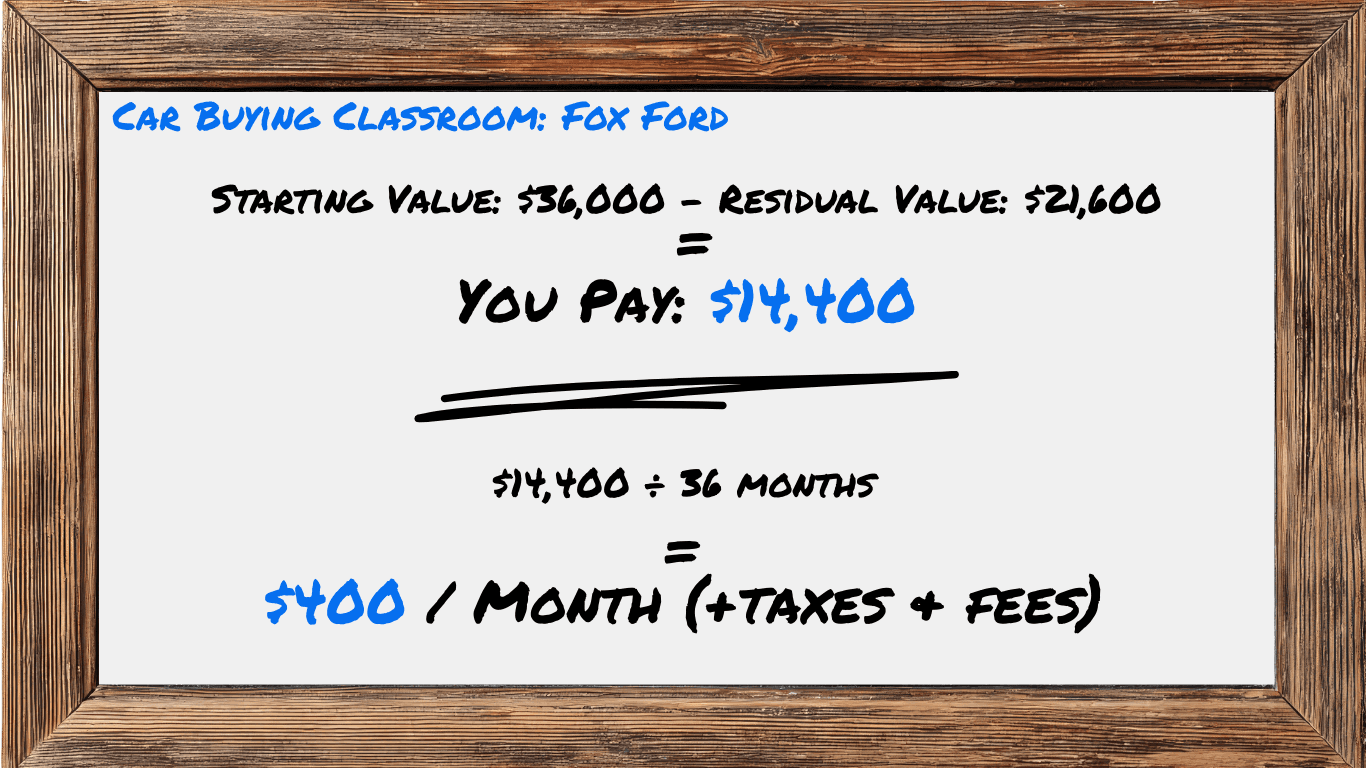
Imagine the vehicle has a sticker price of $36,000. When you lease a vehicle, the bank estimates what that vehicle will be worth at the end of the lease. This estimate is called the residual value, which is the vehicle’s projected worth at the end of the lease term.
Let’s say the lease term is 36 months, and the bank predicts the vehicle will be worth $21,600 at the end of the lease.
That means the vehicle is expected to maintain 60% of its value.
- Starting Value: $36,000
- Residual Value: $21,600
When you lease, you only pay for the portion of the vehicle that you use. In this example, you are paying $14,400 ($36,000-$21,600) for the portion of the vehicle you are using during the lease. In order to determine your monthly payment, we will divide this amount by the length of the lease in months. $14,400 ÷ 36mo. = $400 per month.
That $400 represents the base monthly cost of using the vehicle (before taxes, interest, or fees).
A higher residual value means lower monthly payments!
Benefits of Leasing
Leasing can be an attractive option for many drivers. Some of its key advantages include:
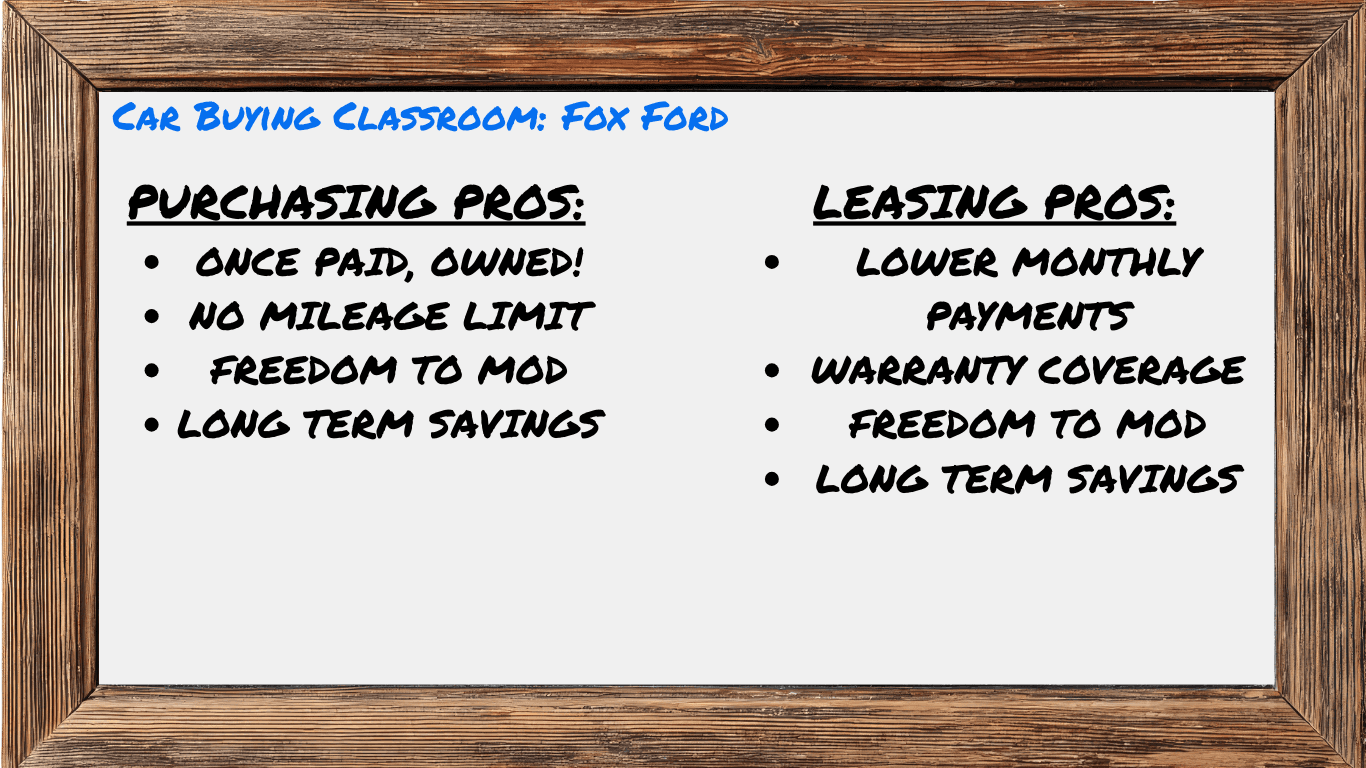
- Lower monthly payments: Because you only pay for the portion of the car you use, lease payments are often lower than loan payments on the same model.
- Warranty coverage: Most leased vehicles remain under the manufacturer’s bumper-to-bumper warranty, which is the factory guarantee that repairs for covered parts are paid for during a set time or mileage limit. This keeps repair expenses predictable.
- Frequent upgrades: Leasing every few years allows drivers to always enjoy the newest technology, safety features, and fuel efficiencies.
- Tax benefits for business use: For some business owners, leasing may offer deductible expenses related to vehicle use (always consult a tax professional).
Leasing works best for drivers who stay within their mileage limits and enjoy switching to a new model regularly.
What Is Purchasing?
When you purchase a vehicle, you pay for the entire value of the car, either by financing it with a loan or paying cash. With a loan, you gradually build equity, meaning ownership value in the vehicle that increases as the loan balance decreases.
Purchasing gives you permanent ownership once the vehicle is paid off. There are no mileage limits, and you can keep, modify, or sell the vehicle whenever you choose.
Benefits of Purchasing
- Full ownership: Once your loan is paid off, you own the vehicle outright and no longer have monthly payments.
- Unlimited mileage: Ownership means you can drive as much as you want without penalties.
- Customization freedom: Because the car is yours, you may add accessories, modify the vehicle, or personalize it.
- Long-term savings: Drivers who keep their vehicles for many years typically spend less overall compared to leasing repeatedly.
Purchasing is ideal for people who plan to hold onto a vehicle for a long time, drive high annual mileage, or want complete control over the vehicle.
Comparing the Costs
Both leasing and purchasing involve different financial structures. A down payment, which is the amount of money paid upfront to reduce the initial cost, can be lower on a lease. Monthly payments are usually lower as well, but leases may include fees for excess wear or mileage at the end of the term.
Purchasing usually requires higher monthly payments, but once the loan ends, the long-term cost drops significantly because the driver no longer owes money on the vehicle.
Which Option Fits Your Lifestyle?
Choosing the right option depends on how you use your vehicle:
- If you prefer lower payments, frequent upgrades, and predictable repairs, leasing may fit your needs.
- If you value long-term ownership, unlimited mileage, and customization, purchasing may be the better choice.
- Drivers with heavy annual mileage usually benefit more from ownership, while drivers with short commutes or well-defined travel patterns often prefer leases.
Common Misconceptions
Consumers often hold misunderstandings about leasing. For example, some believe a lease means “throwing money away.” In reality, a lease is simply another financial tool, paying for use rather than long-term ownership. Before you finalize the deal on your new car, you should ask yourself, “Will I want another new vehicle in two or three years?” If so, you should look into lease payments and compare them to the cost of purchasing the vehicle. You may find that the depreciation of the vehicle in three years would potentially exceed the cost of leasing.
Another misconception is that lease-end charges are unavoidable. These fees only apply when damage or mileage exceeds the agreed terms. Furthermore, there are usually programs in place which could help protect you from large lease-end charges such as Ford’s Wear Care.
Conclusion
Understanding the differences between leasing and purchasing helps shoppers choose a path that supports their financial goals, driving habits, and lifestyle preferences. Both methods offer clear advantages when matched to the right type of driver. Whether you prefer the flexibility of leasing or the long-term value of ownership, knowing these key terms and concepts ensures a confident, informed decision.
0 comment(s) so far on Leasing vs. Purchasing: Understanding Your Options